
How Long Does Insurance Pay for Temporary Housing?
After a home is damaged by fire, storm, or a covered flood loss, most homeowners rely on insurance to cover temporary living expenses. A common question is: How long will insurance continue paying for temporary housing?
The answer depends on your policy, the type of damage, and how long repairs reasonably take—but there are clear guidelines that apply in most situations.
What Coverage Pays for Temporary Housing?
Temporary housing is typically covered under Additional Living Expenses (ALE), also known as Loss of Use coverage.
This part of your homeowners insurance helps pay for the extra cost of living somewhere else while your home is being repaired or rebuilt after a covered claim.
To understand the basics of how this works, see what is ALE coverage.
How Long Does ALE Coverage Last?
In most cases, insurance will pay for temporary housing for:
The time it takes to repair or rebuild your home—using a reasonable and necessary timeline.
This is often referred to as:
“Reasonable repair period”
“Time required to restore the property”
Typical Timeframes
Minor damage: a few weeks
Moderate repairs: 1–3 months
Major damage (fire or structural): 6–12+ months
There is no fixed number of days in many policies. Instead, the duration is tied directly to the scope of the repairs.
Policy Limits That Affect Duration
Even though coverage is time-based, there are limits that can affect how long it lasts.
1. Coverage Limits (Dollar Cap)
ALE is usually capped at a percentage of your dwelling coverage, often:
20%
30%
Once that amount is used, coverage may stop—even if repairs are not complete.
2. Time Limits (Some Policies)
Some policies include a maximum time period, such as:
12 months
24 months
This acts as a secondary limit alongside the dollar cap.
3. Delays and “Reasonable Time”
Insurance typically covers the normal repair timeline, but may not cover delays caused by:
Contractor scheduling issues outside normal expectations
Homeowner-driven changes or upgrades
Unrelated permitting delays
However, widespread events (like hurricanes) can extend what is considered “reasonable.”
What Happens if Repairs Take Longer?
If repairs extend beyond your ALE limits, you may need to:
Transition to out-of-pocket housing
Request extensions (case-by-case)
Adjust your housing choice to reduce costs
In longer claims, choosing a cost-effective housing option early can help your coverage last longer.
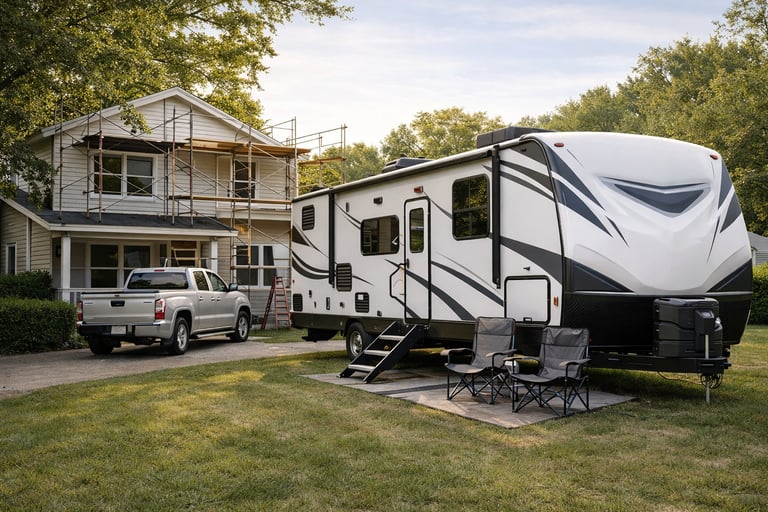
For example, in some situations, temporary RV housing may extend how far your ALE coverage goes compared to long-term hotel stays.
Choosing the Right Temporary Housing Option
Insurance does not require you to stay in a hotel. The key requirement is that your housing is:
Reasonable and comparable to your normal standard of living.
Options may include:
Hotels
Rental homes or apartments
Staying with family (with expense reimbursement)
Temporary RV housing on your property
In certain cases—especially rural properties or long rebuilds—RV housing can be a practical solution.
Situations That Can Extend ALE Duration
Some claims naturally lead to longer coverage periods:
Major fire damage requiring full rebuild
Structural repairs or code upgrades
Widespread disasters (e.g., hurricanes) affecting contractor availability
In storm-related claims, such as hurricanes, timelines can extend due to labor shortages and material delays. You can learn more about temporary housing after a hurricane if your situation involves storm damage.
Key Takeaway
Insurance typically pays for temporary housing for as long as it reasonably takes to repair your home—subject to policy limits.
The actual duration depends on:
Scope of damage
Repair timeline
Policy limits
Housing costs over time
Choosing the right housing option can make a significant difference in how long your coverage lasts.
Talk Through Your Situation
Every claim is different, and timelines can vary widely.
RVHousingPros can help you evaluate your options for temporary housing and determine what makes the most sense based on your property, timeline, and insurance coverage—working alongside your contractor when needed.
Temporary RV Housing — Done Right.
Helping displaced homeowners across the Carolinas.

© 2016–2026 RVHousingPros | Legal & Privacy