What Is Additional Living Expense (ALE) Coverage and How Does It Work?
When a home becomes unlivable due to fire, storm damage, water loss, or another covered event, homeowners insurance policies often include a provision called Additional Living Expense (ALE) coverage.
ALE is designed to help cover the cost of temporary housing and related expenses while repairs are completed.
Understanding how ALE works — including limits, duration, and housing approval — is essential when evaluating temporary housing options during an insurance claim.
What Is Additional Living Expense (ALE)?
Additional Living Expense coverage pays for the reasonable increase in living costs when a covered loss makes your home uninhabitable.
This may include:
Temporary housing
Hotel stays
Short-term rentals
Temporary RV housing
Increased food costs
Laundry expenses
Storage fees
ALE does not function as unlimited reimbursement. It is subject to policy limits and must meet the standard of “comparable living conditions.”
When Does ALE Coverage Apply?
ALE typically applies when:
Fire damage makes the home unsafe
Storm damage causes structural loss
Water intrusion requires major restoration
Mold remediation requires extended displacement
The home is deemed unlivable during reconstruction
The insurance adjuster determines whether the home is uninhabitable and for how long coverage will apply.
In many cases, extended rebuild timelines following storm or water damage can result in temporary housing needs lasting several months.
How Long Does ALE Coverage Last?
ALE coverage in North Carolina generally continues until:
Repairs are completed, or
The policy’s ALE limit is reached, whichever comes first
Policies typically define limits in one of three ways:
A percentage of dwelling coverage (for example, 20–30%)
A fixed dollar amount
A specified time period, often 12–24 months
Large structural repairs — especially after fire or major water damage — often extend longer than homeowners initially expect.
What Does “Comparable Living Conditions” Mean?
Insurance policies require that temporary housing provide living conditions similar to the insured home. This does not mean identical square footage or luxury features.
It means the temporary housing must be:
Safe
Functional
Reasonable for the household size
Appropriate for the circumstances
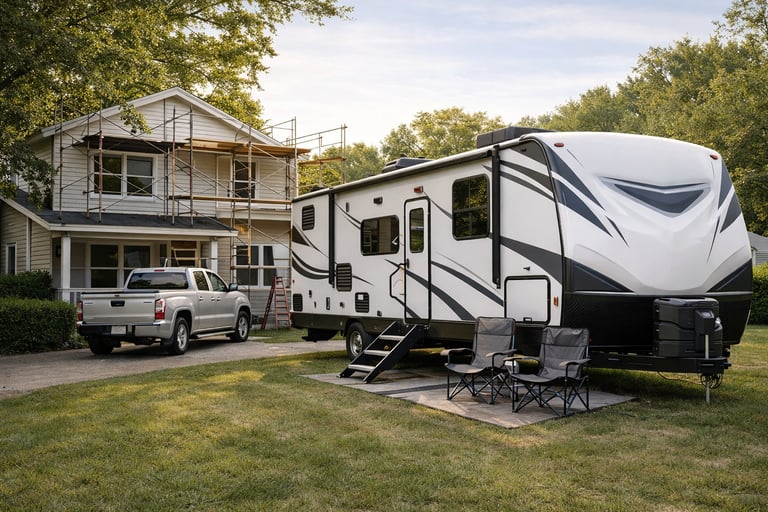
Temporary RV housing placed onsite can often meet comparable living standards when properly configured for long-term occupancy.
Is Temporary RV Housing Covered Under ALE?
In many cases, temporary RV housing may qualify under ALE when:
It provides reasonable accommodations
It reduces overall housing costs
It allows the homeowner to remain on their property
It is approved by the adjuster
Each claim is evaluated individually based on policy language and housing availability.
Understanding housing options early in the claim process can help prevent delays and reduce long-term disruption.
How ALE Payments Are Typically Handled
ALE payments are usually:
Reimbursed directly to the homeowner, or
Paid to an approved housing provider
Documentation is often required, including:
Rental agreements
Invoices
Placement confirmation
Utility arrangements
Clear communication between the homeowner, adjuster, and housing provider helps avoid misunderstandings during the repair period.
Why ALE Knowledge Matters During Long-Term Repairs
Rebuild timelines can extend due to:
Contractor availability
Permit delays
Material shortages
Weather interruptions
Homeowners who understand ALE limits and housing options early in the process are better positioned to make stable long-term decisions during reconstruction.
Additional Living Expense coverage exists to provide continuity and protection during one of the most disruptive events a homeowner may experience.
Related Resources
Does Insurance Cover Temporary RV Housing During Home Repairs?
How Long Does Insurance Pay for Temporary Housing?
Temporary RV Housing During Insurance Repairs
Temporary RV Housing — Done Right.
Helping displaced homeowners across the Carolinas.

© 2016–2026 RVHousingPros | Legal & Privacy